Is it useful? Overhyped? Maybe a little of both.
Apple cider vinegar has lived many lives.
Pantry staple. Folk remedy. Weight loss miracle. Detox darling.
The truth, as usual, sits somewhere in the middle.
Let’s sort this out.
Apple Cider Vinegar: The Hype vs. The Humble Reality
At its core, apple cider vinegar (ACV) is simply fermented apple juice. Yeast consumes the sugars. Bacteria convert the alcohol into acetic acid. What you’re left with is sour, sharp, and surprisingly useful.
That cloudy “mother” floating in raw vinegar? It’s a collection of beneficial bacteria and fermentation byproducts. It looks slightly alarming. It isn’t dangerous.
Now.
Does ACV cure everything from stubborn belly fat to existential dread?
No.
But it isn’t useless either.
There is legitimate research suggesting that small amounts of vinegar before or with meals may:
- Slightly improve blood sugar response
- Increase feelings of fullness
- Modestly support weight management over time
Notice the words “slightly” and “modestly.” We’re not talking about miracles. We’re talking about gentle nudges.
Anecdotally, many people find diluted ACV helpful for occasional heartburn or sluggish digestion. Others find it irritating.
This isn’t a one-size-fits-all tonic. It’s acid, so dilution is important. Protect your enamel, protect your esophagus.
And Then There’s Fire Cider
If ACV is the quiet pantry staple, fire cider is the friend who shows up in boots and yells, “LET’S CLEAR YOUR SINUSES!”
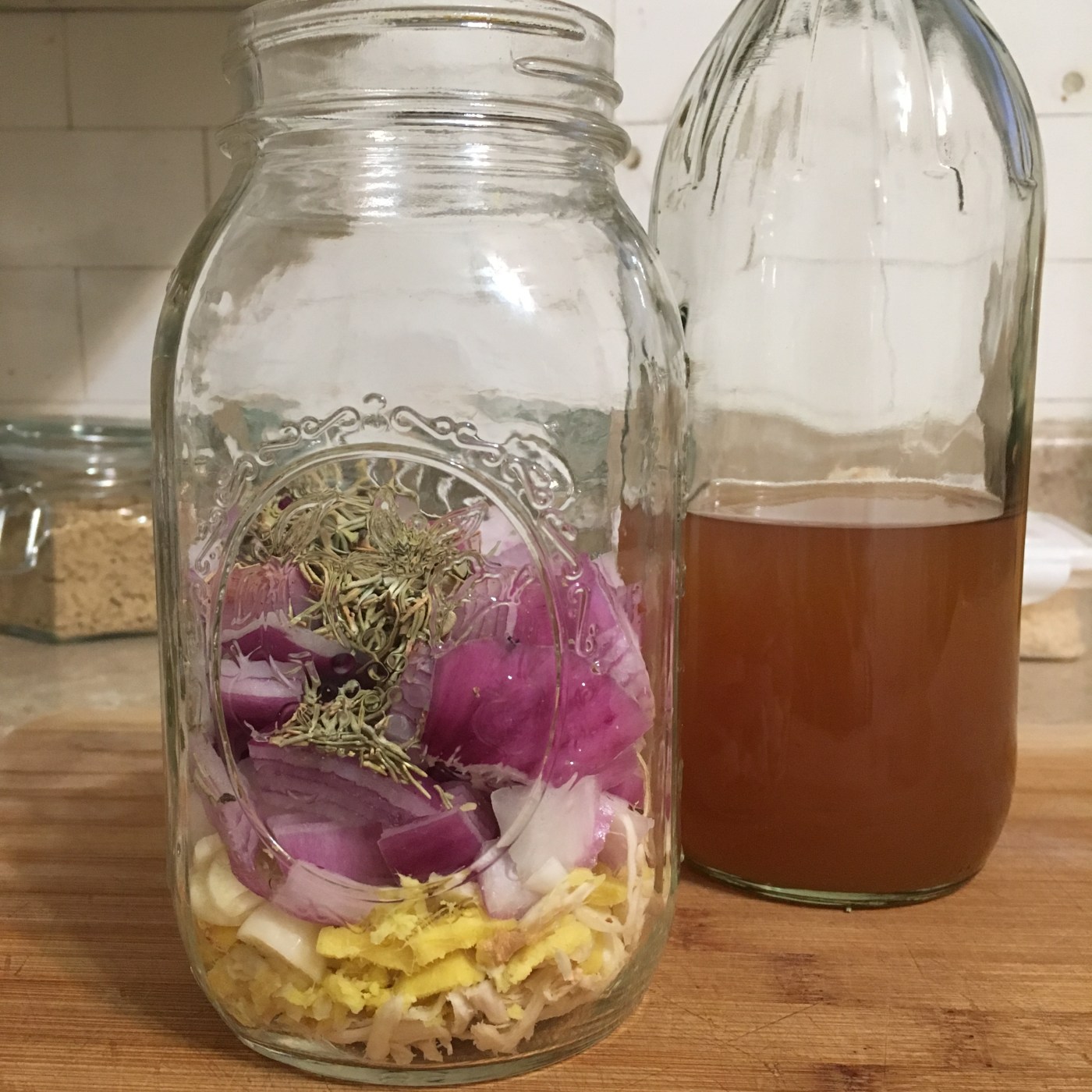
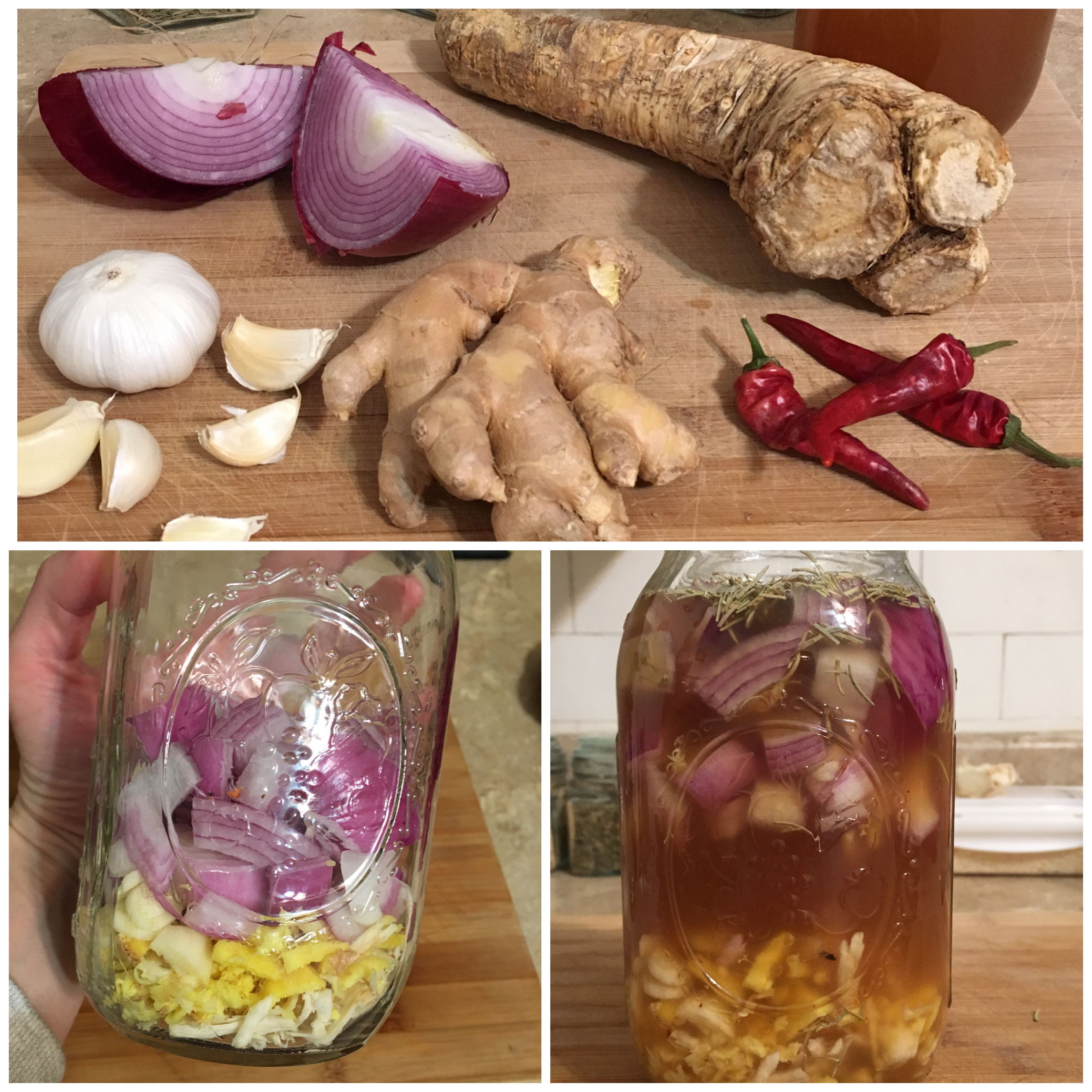
Traditionally made by infusing raw apple cider vinegar with garlic, ginger, onion, horseradish, and hot peppers (sometimes citrus, herbs, or honey), fire cider is not at all subtle or “gentle.” That kick is the reason why many reach for it during cold and flu season.
It was popularized in the 1970s by herbalist Rosemary Gladstar, though versions of spicy vinegar tonics have existed long before that.
And yes…it tastes exactly like it sounds!
Does Fire Cider “Boost Immunity”?
Short answer? There are no clinical trials proving that fire cider prevents illness.
Long answer? Every ingredient in that jar has its own body of research.
- Garlic contains sulfur compounds associated with antimicrobial and cardiovascular support.
- Ginger has documented anti-inflammatory and digestive effects.
- Hot peppers stimulate circulation and temporarily open nasal passages.
- Horseradish brings volatile oils that absolutely make their presence known.
- Onion brings quercetin and other antioxidant compounds traditionally valued for respiratory support — along with antimicrobial properties of its own.
When you combine them in vinegar, you create a stimulating, warming, plant-rich tonic that’s loaded with antimicrobials. Adding honey enhances those benefits.
Is it a cure-all? No.
Is it biologically meaningless? Also no.
It increases circulation.
It stimulates digestion.
It may make your eyes water a bit.
Sometimes, that is exactly what a cold, damp winter body needs.
A Practical Position
Here’s where I land now:
Apple cider vinegar has measurable, modest benefits.
Fire cider is steeped in tradition and a bit of attitude.
Neither replaces sleep.
Neither replaces nourishment.
Neither replaces appropriate medical care.
But both can belong in a grounded, common-sense wellness routine.
If you take a tablespoon of diluted ACV before meals because it supports your digestion? That’s reasonable.
If you reach for a shot of fire cider at the first sign of a sniffle because it makes you feel warmed and awake? Also reasonable.
Just don’t expect it to rewrite your biology overnight. Expectations are important.
How I Actually Use It
I use raw ACV in dressings and occasionally diluted in water before heavier meals or when I’m feeling a little off digestively.
Fire cider, I treat like seasonal support — a tablespoon most days in winter, a little more if something feels like it’s brewing.
Not because it’s magic.
Because it’s stimulating, antimicrobial, traditional — and sometimes tradition sticks around for a reason.
And if nothing else?
It will absolutely clear your head.
Fire Cider Recipe
A warming, stimulating vinegar infusion for cold seasons
There are endless variations of fire cider. This is mine — simple, flexible, and rooted in the traditional ingredients that give it its reputation.
Ingredients
1 medium onion, chopped
1 whole head of garlic, cloves peeled and lightly crushed
1–2 inches fresh ginger root, sliced
1–2 inches fresh horseradish root, grated or finely chopped
1–2 hot peppers, sliced (jalapeño, cayenne, or whatever you tolerate)
Optional: sliced lemon or orange, rosemary, thyme, black peppercorns
Raw, unfiltered apple cider vinegar (with the “mother”)
Raw honey (added after straining, optional)
Instructions
Place all chopped herbs and vegetables into a clean glass jar.
Pour apple cider vinegar over everything until fully submerged. Leave about an inch of headspace.
Use a piece of parchment paper under the lid if your lid is metal, to prevent corrosion.
Seal tightly and store in a cool, dark place for 3–4 weeks. Shake gently every few days.
After 3–4 weeks:
Strain through cheesecloth or a fine mesh strainer, pressing well to extract the liquid.
Add raw honey to taste if desired. Stir until dissolved.
Store in a sealed glass bottle in the refrigerator or a cool pantry.
It keeps for several months.
How to Use
1 tablespoon daily during colder months as seasonal support.
1 tablespoon diluted in warm water at the first hint of a scratchy throat.
Or use it in salad dressings and marinades if it’s too much for you take it straight.
(There’s no need to be heroic about it!)
And it’s delicious in recipes.
Start small. Notice how you feel. Adjust accordingly.
Final notes
Fire cider isn’t a shield against everything. It’s a stimulating, plant-rich vinegar infusion that supports circulation, digestion, and that unmistakable “clearing” sensation many of us associate with respiratory comfort.
It works best as part of a bigger picture — nourishing food, adequate rest, frequent hand washing, fresh air.
That is real life herbalism.
 Pathways and Potions
Leave a comment