It was only a matter of time before medicinal mushrooms found their way into my herbal studies.
I’ve always loved eating mushrooms, and learning to forage them has been on my bucket list for years. What I didn’t realize at the time was that mushrooms have been valued for far more than their culinary appeal.
As often happens when I stumble onto something intriguing, one question quickly leads to another. The deeper I looked, the more fascinating the subject became.
There are many mushrooms used in traditional herbal practices, but reishi is probably the most well-known—and one of the most widely studied.
What is Reishi?
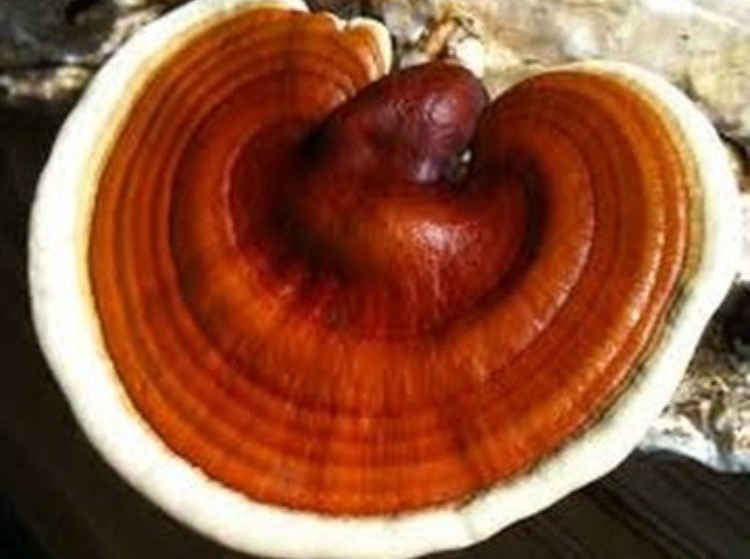
Ganoderma lucidum, reishi, also known as “ling zhi” in China, is the species most people refer to when discussing reishi. (There are several other reishi species with medicinal properties of their own). G. lucidum has been used in Japan, China, and other Asian cultures for thousands of years as a tonic for health and longevity and is often referred to as the “mushroom of immortality.”
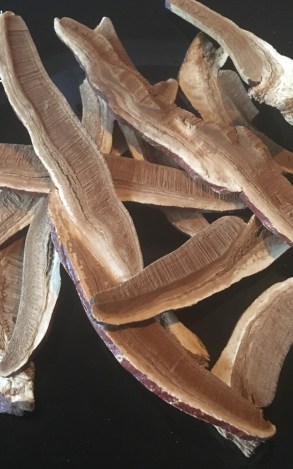
Reishi grows exclusively on hardwood trees, usually oak. The fruiting body is reddish orange to brown with a shiny top that appears varnished. It is a polypore, which means it has spores instead of gills on its underside. If obtained fresh, there may be a white rim around the edges which is younger growth and edible. Otherwise, reishi is considered inedible. With a texture best described as spongy wood, it’s nearly impossible to chew!
Despite this, the entire mushroom is used medicinally, and even the spores contain a number of beneficial constituents.
Reishi can be consumed as tea or a broth, which is steeped for several hours resulting in a strong, bitter concoction.
Because of its bitter taste, tinctures are a popular way to consume reishi. Double-extraction tinctures, combining an alcohol extraction with a hot water extraction, provide a greater range of benefits because each method extracts different constituents.
Numerous Beneficial Constituents Found in Reishi
The two major groups of bioactive compounds responsible for reishi’s wide range of benefits are polysaccharides and triterpenes.
The polysaccharides found in reishi have demonstrated anti-inflammatory, antioxidant, hypoglycemic, anti-ulcer, anti-tumor, and immune-stimulating effects. Triterpenes, which contribute to reishi’s characteristic bitter taste, are known for their anti-inflammatory, antihistamine, anti-tumor, hypotensive, and antioxidant properties.
Approximately 140 different triterpenes have been identified in reishi, with roughly 50 unique to this mushroom alone. (1)
Other constituents contributing to reishi’s healthful effects include peptidoglycans, sterols, phenols, vitamins, minerals, amino acids, and high levels of germanium.
Germanium is an element found in many medicinal plants and mushrooms and is currently being studied for its anti-cancer, antioxidant, and immunomodulating effects. (2)
Immunomodulators help balance the immune system, meaning they stimulate immune activity when needed while also protecting against over-stimulation. Germanium is also believed to improve the body’s ability to absorb and utilize oxygen. (Hobbs, 1986)
So what does all of this scientific mumbo-jumbo mean in plain English?
It means that reishi mushrooms are powerful allies when it comes to protecting the body from chronic disease and supporting overall health.
Reishi Helps Fight Cancer
Many scientific studies on reishi have focused on its potential role in cancer support. Research suggests that reishi exhibits chemopreventive, anti-tumor, and anti-mutagenic properties across a wide range of cancers, including breast, ovarian, cervical, liver, lung, and prostate cancers.
When used alongside conventional treatments, reishi has been shown to enhance the therapeutic effects of chemotherapy and may improve patient outcomes. In addition, individuals supplementing with reishi often report fewer treatment side effects—including anxiety, insomnia, fatigue, and loss of appetite—and an overall improvement in quality of life during treatment. (3, 4)
That said, while studies do highlight reishi’s immune-stimulating and chemotherapy-enhancing effects, a review in the Cochrane Database concluded that there is still insufficient evidence to recommend reishi as a primary treatment for cancer. (5)
In Japan, reishi has been officially listed as an adjunct therapy in cancer treatment. (Hobbs, 1986)
Reishi Supports the Liver
Numerous studies have demonstrated reishi’s beneficial effects on liver function, and it is believed to support the body’s natural detoxification processes.
Research suggests it may help protect the liver from damage caused by alcohol and environmental toxins, with particularly strong protective effects observed in otherwise healthy individuals.
Reishi has also been shown to help reverse damage and relieve symptoms associated with conditions such as hepatitis, cirrhosis, and fatty liver disease—especially in mild to moderate cases. (6, 7, 8)
Reishi Promotes Healthy Respiratory Function
In traditional medicine, reishi is said to have a special affinity for the lungs.
Its anti-inflammatory and antihistamine actions make it useful for chronic respiratory conditions such as asthma and bronchitis. It is also traditionally used as both an expectorant and antitussive, helping to clear mucus and calm persistent coughs.
Reishi is also believed to improve oxygen exchange in the lungs, further supporting respiratory health. (Hobbs, 1986)
As a side note, these same properties likely contribute to reishi’s usefulness in easing seasonal allergies.
Reishi Helps Protects Against Heart Disease
Reishi’s traditional use as a cardiotonic is supported by its anti-inflammatory, lipid-lowering, and blood pressure-reducing properties. (9)
It is also believed to help relieve palpitations and angina and may assist in reducing fluid retention (edema).
Because reishi has mild anticoagulant effects, those taking blood-thinning medications should consult their healthcare provider before supplementing. (Hobbs, 1986)
Reishi Combats Aging
Considering everything we’ve covered so far, reishi’s long-standing reputation as the “mushroom of immortality” or the “elixir of eternal youth” seems to be well-deserved.
Modern research appears to support this traditional reputation. Reishi’s antioxidant, anti-inflammatory, and immunomodulating effects help protect cells from damage, potentially slowing degenerative processes associated with aging.
Reishi also shows promise for brain health. Bioactive compounds found in the mushroom appear to stimulate production of nerve growth factor, which may play a role in treating neurodegenerative conditions such as Parkinson’s disease.
Early research also suggests that reishi compounds may interfere with brain signaling pathways involved in the progression of Alzheimer’s disease, and it has been used successfully in some treatment settings. (10)
In traditional medicine, reishi is considered an adaptogen, often recommended to help reduce stress, anxiety, and mental fog while supporting energy and vitality.
It may not make you immortal—but it’s easy to see how regular use could contribute to a longer, healthier life.
Reishi May Help Relieve Shingles Pain
In small scale studies, reishi has been shown to be effective in treating shingles pain with “dramatic improvement” reported in elderly individuals.
Its antiviral properties may also help speed the healing of lesions. (11)
Reishi Prevents Altitude Sickness
This is one of those bit of herbal trivia that are just good to know!
Likely due to it’s ability to improve oxygenation of the blood, reishi is known to be an effective remedy for altitude sickness. (Hobbs, 1986)
Some herbalists report greater effect when used in combination with holy basil (tulsi).
It May Be An Antidote for Poisonous Mushrooms
The dosage suggested for this traditional use is pretty dramatic: 120–200 grams of dried reishi decocted in water and taken as a tea three to five times daily.
For comparison, the typical supplemental dose of reishi is about 1 gram of dried mushroom three times per day. (Hobbs, 1986)
I haven’t been able to determine exactly which poisonous mushroom species this remedy is meant to counteract, so I’m not entirely sure how practical this information is—but it’s certainly interesting.
Foraging for Reishi
Unfortunately, Ganoderma lucidum itself can be difficult to find where I live as it prefers a slightly warmer climate. The good news is that Ganoderma tsugae, often called hemlock reishi, grows abundantly in Pennsylvania’s dense hemlock forests.
Hemlock reishi is very similar in its medicinal qualities and can be a good substitute if it’s what you have access to or simply prefer to use what grows around you.
Another option for the freshest mushroom is to cultivate your own. Kits can be purchased online and reishi is not difficult to grow. This is an fun and interesting experiment, also very rewarding!
If this is not your style, dried reishi mushrooms can be purchased whole, sliced, or in powdered form. Tinctures and double extractions are also widely available online and in heath food stores.
Offline Reference:
Hobbs, C. (1986). Medicinal Mushrooms An Exploration of Tradition, Healing, & Culture. Summertown, TN: Botanica Press.
 Pathways and Potions
Reblogged this on hocuspocus13 and commented:
jinxx♠xoxo
LikeLike