Gut health is not particularly glamorous.
Nobody gets excited about talking about digestion, bowel habits, bloating, or the trillions of microorganisms currently setting up residence in their intestines.
But I think we need to talk about it anyway.
Over the years, I’ve noticed that when I’m consistently eating in a way that supports my digestive health, I don’t just feel better in the obvious ways. Yes, I’m less bloated and uncomfortable, my belly is flatter, and my digestive system functions better.
But I also feel lighter, and not just physically.
My head feels clearer. My energy is better. I don’t have that same heavy, sluggish feeling that makes everything seem harder than it should.
It’s one of those changes that’s difficult to appreciate until you’ve experienced the difference yourself.
And while the wellness industry has given us a million ways to “fix” our guts, often involving an expensive supplement or protocol, gut health isn’t a trendy wellness concept.
It’s basic physiology.
We can work on our weight, exercise, sleep, stress, hormones, inflammation, and mental health separately. But eventually, we have to talk about the digestive system because it intersects with all of them.
Especially in midlife.
What Do We Actually Mean by Gut Health?
When people talk about “gut health,” they’re usually talking about two things that overlap: how well the gastrointestinal system functions and the health of the gut microbiome.
Your digestive tract has the fairly enormous job of breaking down food, absorbing nutrients, eliminating waste, interacting with the immune system, and maintaining a barrier between the contents of your intestines and the rest of your body.
Meanwhile, your digestive tract is home to an enormous community of bacteria, fungi, viruses, and other microorganisms collectively known as the gut microbiota.
The genetic material and activity of this community are generally referred to as the microbiome.
Some of these organisms help break down components of food we can’t digest ourselves. They produce compounds our bodies use, interact with our immune and nervous systems, and help maintain the intestinal environment.
And ideally, we don’t want one supposedly magical “good bacteria” taking over.
We want diversity.
Think less pristine suburban lawn and more healthy forest ecosystem.
Lots of different organisms performing different jobs and keeping one another in check.
What Does the Standard American Diet Do to Our Gut?
Unfortunately, the way many of us eat in modern life isn’t particularly friendly to that ecosystem.
The Standard American Diet tends to contain plenty of ultra-processed foods, refined carbohydrates, added sugars, saturated fat, and salt — while often being surprisingly low in fiber and plant diversity.
And our gut microbes eat what we eat.
A diet built around the same handful of highly processed foods simply doesn’t provide the variety of fibers and plant compounds that support a diverse microbial community.
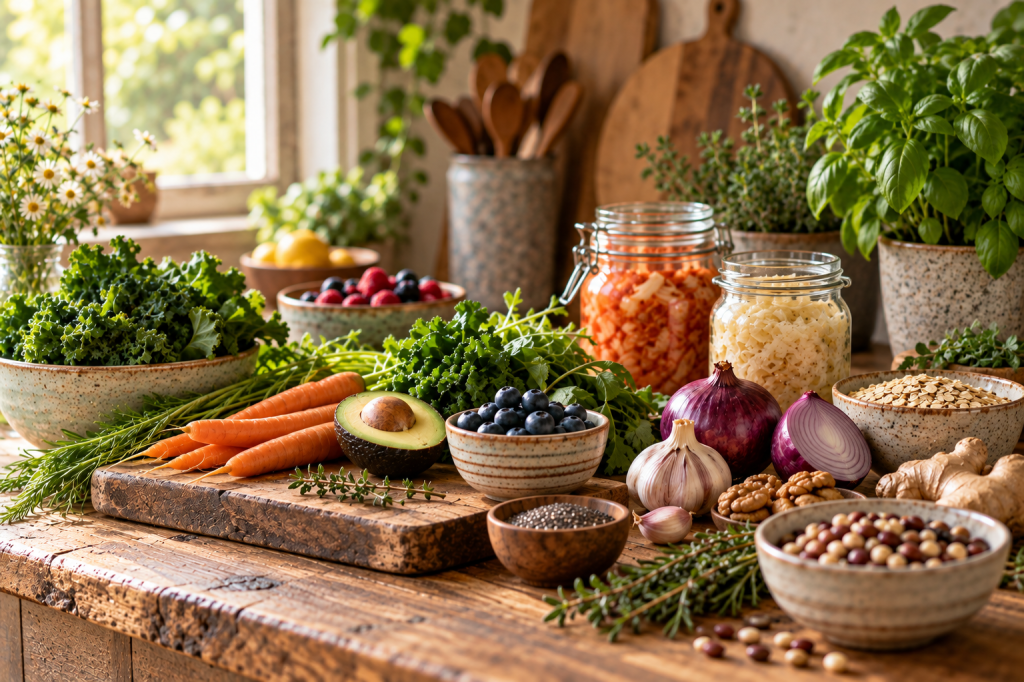
What that means is that the boring advice we’ve heard forever — eat more vegetables, fruit, beans, whole grains, nuts, seeds, herbs, and spices — is important for more than “just” vitamins and weight management.
Different plant foods contain different fibers and compounds that feed different microorganisms, and variety is one of the most useful things we can give our gut.
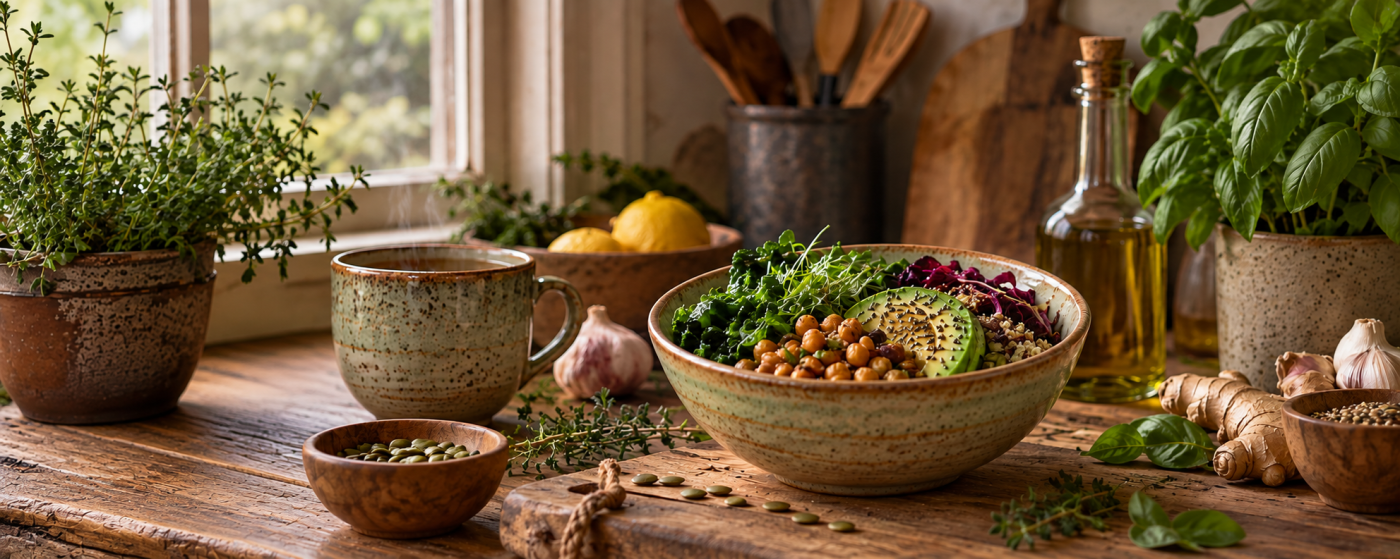
Your oatmeal counts. So do blueberries, walnuts, lentils, onions, garlic, rosemary, chickpeas, apples, pumpkin seeds, broccoli, cinnamon, and the herbs growing on your windowsill.
Your Gut and Your Brain Are Talking to Each Other
This is where the research into gut health gets particularly interesting.
Your digestive system and brain communicate constantly through what is called the gut-brain axis.
And it’s a two-way conversation.
Most of us have experienced one side of this without needing a scientific explanation. Get nervous enough before a presentation and suddenly your stomach is having issues. Experience prolonged stress and your digestion may change completely.
But communication also travels in the other direction.
Researchers are studying how the gut microbiome may influence inflammation, neurotransmitter pathways, immune activity, and other processes involved in mood and cognition.
There are associations between alterations in the microbiome and conditions including anxiety and depression, and researchers are increasingly interested in whether changing diet and the microbiome might eventually become one useful part of supporting mental health.
That’s fascinating to me. Our mental and physical health aren’t nearly as separate as we once thought. Everything is connected.
The gut communicates with the brain. The brain communicates with the gut. Food affects the microbiome. Stress affects digestion.
Which may help explain why improving the basics can sometimes make us feel better in ways we weren’t expecting.
How Quickly Can We Change Our Microbiome?
Surprisingly quickly.
Research has shown measurable changes in the gut microbiome within days, and in some circumstances within a day, after significant dietary changes.
That’s encouraging…and it also means we can create less desirable changes relatively quickly.
That doesn’t mean that one weekend of pizza has destroyed your microbiome and you now require an emergency probiotic cleanse.
Our gut microbiomes are influenced by long-term dietary patterns as well as medications, illness, environment, stress, age, activity, sleep, and many other factors.
What we repeatedly feed it matters.
And that means improving gut health doesn’t have to start with some expensive 30-day protocol.
It should probably start with breakfast, lunch, and dinner.
Probiotics and Prebiotics: What’s the Difference?
Probiotics are beneficial live microorganisms that, in adequate amounts, provide a health benefit.
Certain fermented foods can contain live microorganisms, including some yogurts, kefir, kimchi, sauerkraut, and other traditionally fermented foods.
But fermented and probiotic don’t technically mean the same thing. Not every fermented food contains live organisms by the time we eat it, and not every microorganism in fermented food has been proven to provide a specific probiotic benefit.
Prebiotics are basically food for beneficial microorganisms already living in your gut.
Certain fibers and other compounds make their way through our digestive tract and are used by gut microbes.
Prebiotic-rich foods include things like:
- Garlic and onions
- Leeks and asparagus
- Beans and lentils
- Oats and barley
- Bananas and apples
- Flax and other seeds
- Many other fruits, vegetables, and whole grains
This is one reason I generally prefer starting with food rather than supplements.
You aren’t just getting one isolated ingredient. You’re getting fiber, vitamins, minerals, antioxidants, polyphenols, and other plant compounds while simultaneously feeding the microbial ecosystem.
Even some of the herbs and spices we already use, including garlic, ginger, turmeric, cinnamon, and rosemary, contain plant compounds being studied for their effects on the gut microbiome and inflammation.
Do You Need a Probiotic Supplement?
Maybe.
But not because the bottle says GUT HEALTH in enormous letters or you read an article on probiotics. Probiotic supplements aren’t a one-size-fits-all fix. Their usefulness depends heavily on the person, the specific strain, and what you’re actually trying to accomplish.
But for a generally healthy person trying to support microbial diversity, supplements might not be necessary.
Start by taking a look at the environment you’re asking those microorganisms to live in.
If you’re taking a probiotic every morning and feeding your gut almost no fiber or plant variety the rest of the day, you’ve skipped a rather important step. Feed your ecosystem, then decide whether you actually need to add anything else.
There are situations where a healthcare provider may recommend a specific probiotic, particularly after certain illnesses or for particular gastrointestinal concerns.
But probiotic supplements aren’t interchangeable. Different strains have different effects, and evidence for probiotics tends to be strain-specific and condition-specific.
In other words, a probiotic that has evidence for one digestive problem isn’t automatically useful for another.
And not all probiotics are created equal: the benefit really comes down to the exact strain and dose, so a bottle that just says “Lactobacillus” without more detail is a bit of a guessing game.
(More about supplements in an upcoming post!)
Why Gut Health May Matter Even More in Midlife
Here’s where this topic becomes particularly relevant to us.
Researchers have been studying the relationship between the gut microbiome and estrogen.
Certain gut microbes participate in estrogen metabolism through a collection of microbial genes sometimes called the “estrobolome.” In very simplified terms, gut bacteria can influence how some estrogens are metabolized, excreted, and recirculated in the body.
Researchers are also investigating how declining estrogen during the menopausal transition may influence the microbiome in return.
We do not currently have a “menopause microbiome” we’re supposed to achieve, and studies haven’t identified one ideal bacterial composition for midlife women. Keep in mind this is all emerging science.
But the potential relationship makes sense when we consider the bigger picture.
Midlife is already a time when many women experience changes in body composition, insulin sensitivity, inflammation, cardiovascular risk, bone health, mood, sleep, and digestion.
Supporting a healthy digestive system and a diverse microbiome fits remarkably well into the same lifestyle foundation that supports almost everything else we’re working on.
More whole plant foods means more fiber. More fiber supports digestion and feeds gut microbes.
Better digestion means less bloating and constipation.
And yes, sometimes it means a noticeably flatter belly…because you’re no longer walking around with a digestive system that’s perpetually unhappy.
Those foods also tend to provide more vitamins, minerals, antioxidants, and anti-inflammatory plant compounds that benefit us in numerous ways.
Do Not Overhaul Your Diet in One Weekend
If your current diet isn’t particularly gut-friendly, don’t suddenly consume three cups of beans, a giant kale salad, kombucha, sauerkraut, and a fiber supplement tomorrow.
Your gut WILL respond, and as a result, you may decide that this whole gut-health thing was a terrible idea!
Increase fiber gradually, and be mindful to drink enough fluid while you do it.
Then, think about adding variety to your daily diet:
- Throw berries and walnuts on your oatmeal.
- Add beans to soup.
- Put onions and garlic into dinner.
- Buy a vegetable you haven’t eaten lately.
- Add herbs and spices generously.
- Have yogurt or kefir if you tolerate dairy.
- Try a fermented food like kimchi or tempeh.
- Eat the orange instead of drinking orange juice.
You have to eat. Remember to give those trillions of organisms living inside you something decent to eat too.
None of this is revolutionary, and that’s exactly my point — some of the most useful things we can do for our health are remarkably basic.
The Bottom Line
Gut health may not be the most glamorous part of wellness, but it might be one of the most foundational.
A healthier gut doesn’t just mean avoiding bloating or going to the bathroom regularly. It’s actually part of a much larger system involving nutrient absorption, immune function, metabolism, inflammation, and communication with the brain.
And in midlife, when so many of those systems are going through changes of their own, supporting the gut makes a lot of sense.
Sometimes the things we need to help us feel better are the things that seem almost too simple to matter. Improving your gut health might be that thing.


Leave a Reply