
Rosemary has been tied to memory for a very long time. Shakespeare had Ophelia hand it out “for remembrance,” and some old stories say scholars wore it in their hair while they studied. Herbalists have reached for it for centuries to wake up a sluggish mind.
If you’re in perimenopause, you probably know the feeling. The word that vanishes mid-sentence. The walk into a room with absolutely no idea why you’re there. Or finding yourself staring at something you’ve done a hundred times, trying to remember what comes next.
Brain fog is one of the more frustrating and often dismissed experiences of midlife. So it’s fair to wonder whether this familiar kitchen herb has something more to offer than a long history and a good reputation.
As it turns out, rosemary has attracted some interesting scientific attention. And while we’re still learning what it can do, there’s reason to take a closer look.
A Familiar Herb With a Long History
Rosemary (Salvia rosmarinus, formerly Rosmarinus officinalis) is an aromatic evergreen shrub belonging to the mint family. It’s native to the Mediterranean, although you’ll find it growing in herb gardens and kitchen windowsills just about everywhere.
Most of us recognize its distinctive, pine-like fragrance and the flavor it adds to roasted potatoes, vegetables, and savory dishes. But rosemary has a history that reaches well beyond the kitchen.
Traditionally, herbalists have used rosemary to support digestion, circulation, mental clarity, and alertness. It has also been associated with remembrance, loyalty, and protection in various cultures.
That connection to memory is particularly interesting today, as researchers explore how rosemary’s natural compounds may influence brain function.
Why Brain Fog Becomes So Familiar in Midlife
Before we get into rosemary, it’s worth understanding what’s happening in the first place.
During perimenopause, fluctuating estrogen levels can affect brain systems involved in memory, attention, and concentration. Add disrupted sleep, chronic stress, and the mental load that often comes with this stage of life, and it’s easy to understand why our brains sometimes seem to have their own agendas.
For many women, these changes are temporary and improve as hormones stabilize. That doesn’t make them any less aggravating when you’re standing in the grocery store trying to remember the one thing you actually came to buy.
I’ve talked more about the relationship between hormones, sleep, and everyday habits in my other midlife wellness articles. For now, let’s look at where rosemary might fit into the picture.
What Rosemary May Offer the Midlife Brain
Memory, Focus, and Mental Clarity
Rosemary’s traditional reputation as a memory herb has prompted researchers to investigate whether it can actually influence cognitive performance.
Some human studies have found improvements in certain measures of memory, alertness, or mental processing after exposure to rosemary preparations or aroma.
One particularly interesting study involving older adults found that a relatively small amount of dried rosemary improved one measure of memory performance, while a much larger amount appeared to have the opposite effect.
More isn’t always better, even when we’re talking about herbs.
Stress, Mood, and Sleep
Rosemary is generally considered a stimulating herb, traditionally used when energy and concentration feel a little sluggish. For this reason, it’s typically thought of as more of a daytime herb.
Research has also explored its effects on anxiety, mood, and sleep quality, with some promising findings.
That might seem surprising for an herb associated with alertness, but feeling mentally focused and feeling overstimulated aren’t necessarily the same thing.
Antioxidant and Anti-Inflammatory Support
Rosemary contains several compounds with antioxidant and anti-inflammatory properties.
Antioxidants help protect our cells from oxidative damage caused by free radicals, unstable molecules that can contribute to cellular wear and tear over time.
Our brains are particularly vulnerable to oxidative stress, which is one reason these protective plant compounds are attracting attention.
Rosemary’s constituents may also help protect nerve cells and influence processes associated with brain aging. It’s an interesting area of research, especially as we think about maintaining cognitive health over the years ahead.
Why Might Rosemary Work?
Rosemary is a chemically complex plant, and several of its natural constituents may help explain its traditional uses.
One is 1,8-cineole, an aromatic compound found in rosemary essential oil. Researchers have investigated whether it may influence acetylcholine, a chemical messenger involved in learning, attention, and memory.
In laboratory studies, 1,8-cineole has shown the ability to inhibit an enzyme that breaks down acetylcholine.
Then there are carnosic acid and rosmarinic acid, two compounds studied for their antioxidant and anti-inflammatory activity, including their potential to protect brain cells against oxidative stress.
You don’t need to remember those names to appreciate rosemary. I just think it’s fascinating that a plant we’ve been cooking with for generations contains compounds that scientists are now studying for their effects on the brain.
Traditional herbal knowledge and modern research can complement each other. Centuries of use tell us something about how people have experienced a plant, while scientific studies help us better understand its possibilities, limitations, and safety.
The Power of Scent: Rosemary Aromatherapy
Here’s something that makes rosemary especially interesting, and a little different from some of the other herbal allies I’ve discussed on this blog.
You don’t necessarily have to drink it or take a supplement to experience its potential effects.
Studies investigating rosemary aromatherapy have reported improvements in certain aspects of memory and alertness. Our sense of smell has direct connections to brain regions involved in emotion and memory, and some aromatic compounds can also be absorbed through inhalation.
To me, there’s something appealing about using rosemary in such a simple way.
Before settling down to work, studying something new, or tackling a task that requires concentration, try gently crushing a fresh sprig of rosemary between your fingers and taking a moment to enjoy the aroma.
It’s also a small opportunity to pause, collect your thoughts, and approach what comes next with a little more intention.
And that’s worthwhile in its own right.
Simple Ways to Bring Rosemary Into Your Day
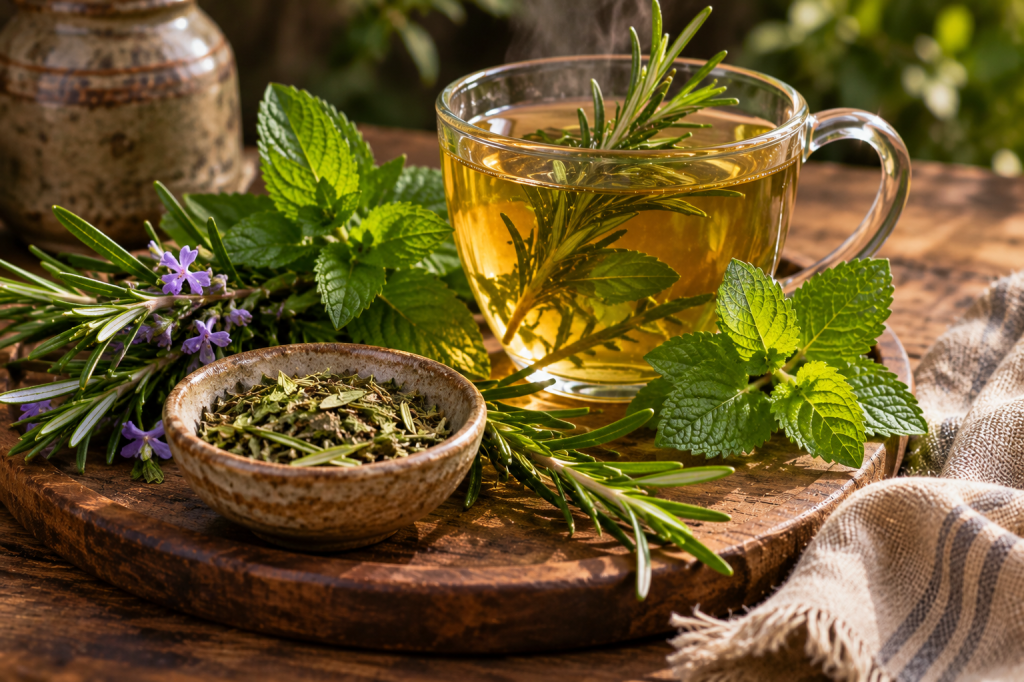
One of my favorite things about rosemary is how easy it is to incorporate into everyday life. You don’t need an elaborate herbal routine or a cupboard full of supplements.
Cook with it. Add fresh or dried rosemary to roasted vegetables, potatoes, beans, soups, eggs, or homemade bread (or pizza!). It’s one of the easiest ways to enjoy the herb regularly.
Make rosemary tea. Steep a small fresh sprig or approximately one teaspoon of dried rosemary leaves in a cup of hot water for five to ten minutes. Strain and enjoy. Rosemary has a strong, slightly resinous flavor, so you may prefer blending it with other herbs. Try combining equal parts rosemary, peppermint or spearmint, and lemon balm for a refreshing late-morning pick-me-up. Start with about one teaspoon of the dried blend per cup and adjust to your taste.
Enjoy the aroma. Keep a rosemary plant near your workspace, crush a sprig between your fingers, or use a diffuser with rosemary essential oil according to the manufacturer’s directions. A little goes a long way.
Make it part of your routine. Whether you’re enjoying rosemary tea while planning your day or keeping a plant on a sunny windowsill, find a way to incorporate it that feels natural to you.
Give yourself some time to experiment and pay attention to how you feel. Part of herbalism is learning which simple practices fit comfortably into your life.
A Few Things to Keep in Mind
Rosemary is generally considered safe in the amounts commonly used in cooking. Medicinal preparations and concentrated essential oils deserve more caution.
If you’re pregnant, stick to ordinary food amounts rather than medicinal doses. People with seizure disorders should avoid rosemary essential oil unless cleared by their healthcare professional, since some preparations contain potentially problematic levels of camphor.
If you take anticoagulant medication or other regular prescriptions, check with your pharmacist or healthcare provider before using concentrated rosemary extracts.
Rosemary essential oil should never be ingested as a home remedy. If you use it on your skin, dilute it appropriately, and keep diffusers away from pets that can’t leave the area.
And one more thing: while occasional forgetfulness is common during perimenopause, persistent, worsening, or disruptive memory changes deserve medical attention. We shouldn’t automatically attribute every cognitive symptom to hormones or simply getting older.
The Takeaway: A Little Rosemary, A Little Perspective
Rosemary has earned its place in kitchens and herbal traditions around the world, and its connection to memory is more than an interesting bit of folklore.
Research suggests it may offer benefits for alertness, certain aspects of memory, and cellular protection. There’s still plenty to learn about its potential for supporting long-term brain health, particularly for women experiencing midlife brain fog.
Of course, quality sleep, regular movement, balanced nutrition, stress management, and understanding hormonal changes all play important roles in cognitive health. Rosemary can be one small part of that bigger picture.
I also think there’s value in the simple act of growing, preparing, and using herbs with intention. Whether you’re adding rosemary to dinner, brewing a cup of tea, or taking a moment to enjoy its fragrance before a busy afternoon, you’re building a habit of paying attention to your own well-being.
And if Shakespeare’s Ophelia could recognize rosemary as a symbol of remembrance more than four centuries ago, perhaps it’s worth keeping a sprig or two around today.


Leave a Reply