I’m not quite sure when it happened, but there came a point in the last few years when self-care stopped feeling like a luxurious indulgence and started feeling like a necessity.
It started with an eye-opening realization that a lifetime of running on stress, caffeine, skipped meals, and people-pleasing was finally catching up with me.
In midlife, our bodies can become far less forgiving of chronic stress, poor sleep, blood sugar swings, and constant overstimulation. Suddenly, the old “push through” approach doesn’t work quite as well as it used to.
So, as selfish as it initially felt, I decided to carve out some time for myself. I was ready for that magical “self-care” that was supposed to turn everything around.
Naturally, I turned to the things we are told to do. There were spa days, fizzy bath bombs enjoyed in long, hot baths, hair and face masks, and champagne brunches with friends.
And they were wonderful!
But while those little luxuries were lovely in the moment, they didn’t actually restore my energy. By the next day, I was just as depleted as I was before that bath bomb melted.
Eventually, I realized that what I really needed was to take better care of myself on an everyday basis.
Eating regularly, getting enough sleep, moving my body, and managing stress. All the things we already know we’re supposed to be doing.
Sounds exciting, doesn’t it?
And when you’re already overwhelmed, another list of healthy habits can feel like punishment.
But here’s something I’ve come to appreciate: taking care of ourselves doesn’t have to feel like a chore.
With a little intention, we can turn those ordinary, unglamorous daily needs into something meaningful. Something we actually look forward to.
Transforming the Mundane Into Something Meaningful

Fortunately, developing meaningful daily rituals doesn’t necessarily require more time. Often, it simply means changing the way we approach the things we’re already doing.
Think about how much of your day happens on autopilot.
We rush through breakfast while checking our phones. We take a walk because our fitness tracker tells us we haven’t moved enough. We prepare dinner while mentally running through tomorrow’s to-do list.
We’re so focused on getting everything done that we barely notice the experience of doing it.
And that’s where a little mindfulness can make a difference.
By bringing our attention to an ordinary moment, we can create a sense of calm, pleasure, or connection in the middle of an otherwise busy day.
A personal ritual can be as simple as slowing down long enough to enjoy something you would have done anyway.
There is no right or wrong way to do this. The goal is to find what helps you feel supported, nourished, and a little more present in your own life.
You get to decide what feels genuinely restorative to you.
Here are six everyday habits that can become meaningful rituals with just a little intention.
1. Making Nourishment More Enjoyable
The Practical Habit: Gulping down a chalky protein shake or eating some cottage cheese straight from the container because you know you need something nutritious.
The Elevated Ritual: Turn your nourishment into a sensory pause.
Eating enough protein and maintaining balanced meals are important parts of supporting our health in midlife. But nourishing ourselves can also be an enjoyable experience.
Whenever possible, choose fresh, satisfying foods that you genuinely like. Take a few extra minutes to prepare something appealing, even if it’s just a simple breakfast or afternoon snack.
Use your favorite plate. Sit down. Put away the phone.
Notice the flavors and textures of your food, and give yourself a chance to actually enjoy eating it.
You may only have 20 minutes for lunch, but those 20 minutes belong to you.
And if you’re eating at your desk because that’s the reality of your day, you can still make the experience a little more pleasant.
Good food, a few quiet minutes, and the opportunity to nourish your body without rushing through every bite.
That sounds pretty luxurious to me.
2. Creating an Evening Wind-Down Ritual
The Practical Habit: Turning off the TV at 9:30 PM because you know you need more sleep, only to lie in bed staring at the ceiling while your thoughts race all over the place.
The Elevated Ritual: Create a gentle transition between the demands of the day and the rest your body needs.
Getting enough sleep is one of the most important things we can do for our health, especially during perimenopause, when hormonal fluctuations can make a good night’s sleep feel frustratingly elusive.
Unfortunately, knowing we need more sleep doesn’t automatically make it happen.
Rather than treating bedtime as another task to check off, try creating an evening routine that you actually enjoy.
Dim the lights. Put away your phone a little earlier. Spend a few minutes writing in your journal or sipping a soothing cup of herbal tea.
Maybe you enjoy using a beautifully scented lotion before bed, listening to soft music, or slipping between freshly washed sheets.
Choose one or two things that help you unwind and make them part of your evening.
There’s no need to create an elaborate routine that requires another 45 minutes of your time…unless you want to, of course.
The idea is to give yourself a pleasant, familiar signal that the day is winding down.
3. Turning Your Daily Walk Into a Moving Meditation
The Practical Habit: Checking off steps on your fitness tracker or power-walking around the block just to get your necessary exercise out of the way.
The Elevated Ritual: Treat your walk as an opportunity to reconnect with yourself and the world around you.
Daily movement is essential for maintaining our health, strength, and mobility as we age. But every walk doesn’t have to be about burning calories, reaching a step goal, or improving our fitness.
Sometimes, we can simply enjoy being outside.
Leave your headphones behind once in a while and pay attention to your surroundings.
Notice the scent of the earth after it rains, the rough texture of bark, the song of a bird, and the colors of the shifting sky.
Feel the breeze against your skin. Listen to the sound of your footsteps.
Let your mind wander a little.
There is something wonderfully grounding about walking without feeling the need to accomplish anything beyond the walk itself.
And if you’re anything like me, a little time outdoors can make a world of difference after a stressful day.
You still get the benefits of moving your body, with the added pleasure of actually experiencing the world around you.
4. Making Morning Light Part of Your Day
The Practical Habit: Standing by the window for five minutes because an article said morning light helps regulate your circadian rhythm.
The Elevated Ritual: Create a peaceful morning anchor before the demands of the day begin.
Exposure to natural light in the morning helps support our internal body clock, which plays an important role in regulating sleep and wakefulness.
It’s a simple habit with meaningful benefits, and one that can easily become a favorite part of your morning.
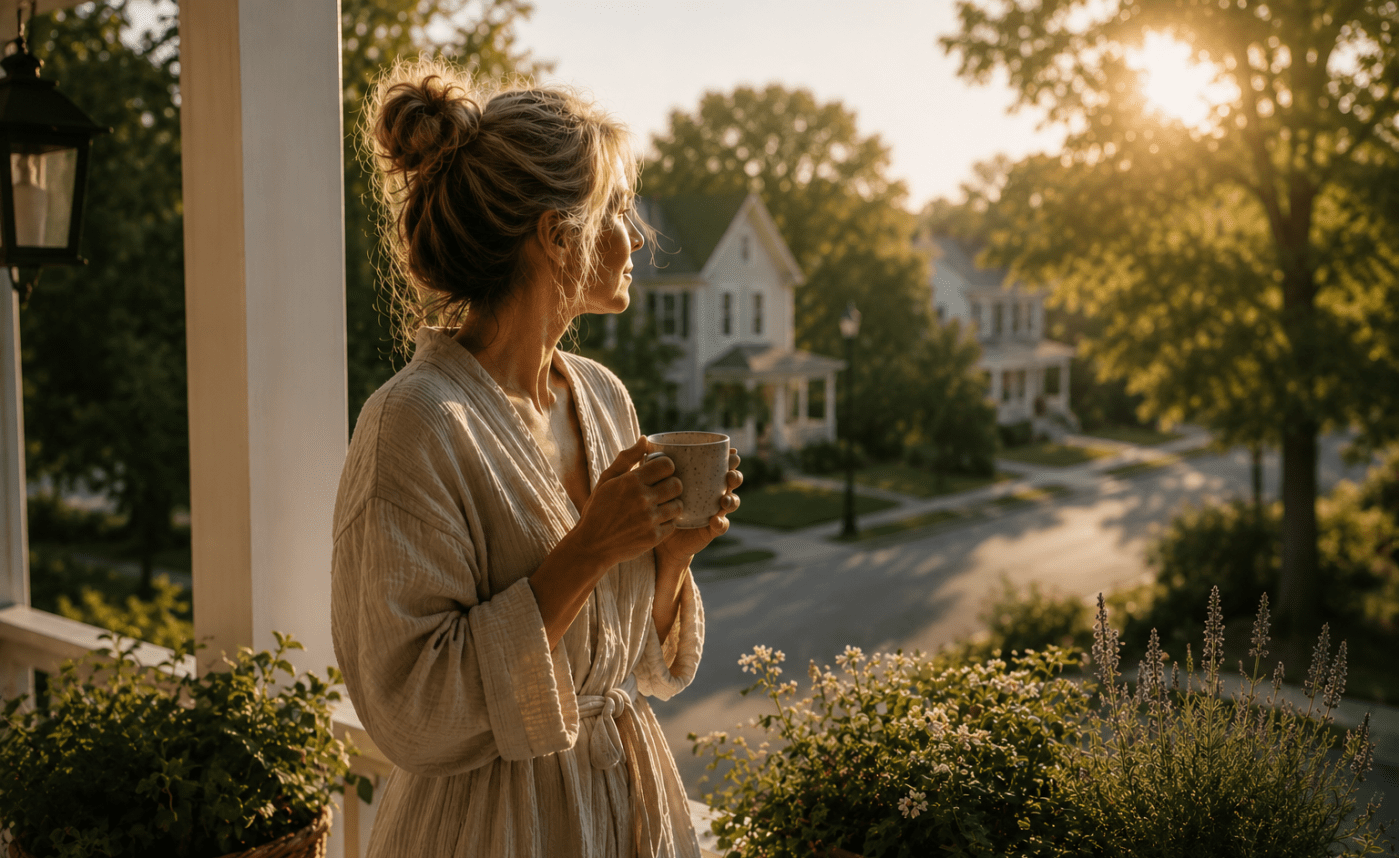
Step outside onto the porch or patio with your coffee or tea.
Feel the cool morning air on your skin. Listen to the birds waking up and notice how the light changes as the sun rises.
Take a few slow breaths and enjoy the quiet before the rest of the world gets moving.
Even a few minutes can feel surprisingly indulgent before a crazy workday.
Of course, not everyone has the luxury of a peaceful morning on the porch. Sometimes you’re rushing out the door with your coffee in one hand and your keys in the other.
That’s life.
But perhaps you can step outside for a few minutes before getting into the car, or take a short walk around the block before starting your day.
The important thing is finding a way to enjoy the experience rather than treating it as another health requirement.
And whenever possible, get that morning light outdoors. Natural daylight is generally much brighter outside than it is through a window.
5. Creating a Sanctuary at the End of the Day
The Practical Habit: Putting your phone on “do not disturb” or avoiding the news because you’re completely overwhelmed and desperately need a break.
The Elevated Ritual: Create an intentional transition from the demands of the outside world to your personal life.
For many of us, the workday doesn’t really end when we leave work.
We carry the stress home with us. We’re still thinking about unfinished projects, tomorrow’s responsibilities, or the conversation that irritated us three hours earlier.
And with phones keeping us constantly connected, it’s easy to remain mentally available to everyone else long after the day should be finished.
One of the most valuable forms of self-care is learning to establish boundaries around our time, attention, and energy.
A simple evening ritual can help reinforce those boundaries.
When you get home, take a few minutes to consciously shift out of work mode.
Change into comfortable clothes. Turn on some ambient lighting, light a scented candle, or put on your favorite music.
Maybe you step outside for a few minutes before tackling dinner and the evening chores.
Whatever you choose, let it become a small reminder that you’re allowed to move on from the demands of the day.
Of course, a candle isn’t going to eliminate chronic stress or solve a difficult work situation. Sometimes protecting our well-being requires making bigger changes, having uncomfortable conversations, or establishing firmer boundaries.
But these small transitions can help us become more aware of where our energy is going.
And that’s an important place to start.
Our time and attention are valuable. We get to have some say in how we spend them.
6. Making Herbal Support a Moment of Mindfulness
The Practical Habit: Preparing an herbal tea like it’s another demanding chore, then gulping it down hurriedly to get on with your day.
The Elevated Ritual: Turn the simple act of preparing tea into a personal check-in.
This is one of my favorite ways to bring a little mindfulness into everyday life.
Herbalism offers us so many opportunities to slow down, engage our senses, and reconnect with the natural world.
And you don’t need an elaborate collection of herbs or complicated recipes to enjoy those moments.
Choose an herb you enjoy and prepare a simple cup of tea.
Listen to the kettle boil. Watch the herbs steep. Breathe in the warm, fragrant aroma.
Wrap your hands around the mug and take a few minutes to enjoy it.
While you’re waiting for your tea, check in with yourself.
How are you feeling?
Are you tired? Restless? Overstimulated? Have you been rushing around all day without taking a moment to yourself?
Sometimes that little pause is enough to help us recognize what we need.
Of course, herbs can offer their own benefits when chosen and used appropriately. But there is also something valuable about the ritual itself.
A few quiet minutes, a warm cup of tea, and the opportunity to pay attention to yourself.
It’s simple, accessible, and just a little bit magical.
And honestly, couldn’t we all use a little more of that?
Finding What Works for You
As you begin experimenting with these ideas, remember that there is no perfect way to practice self-care.
Some days, your rituals will feel peaceful and restorative.
Other days, you’ll be drinking your tea while answering emails, eating lunch over the kitchen sink, or rushing through your walk because you have somewhere else to be.
That’s okay.
The goal isn’t to turn every ordinary moment into some beautifully curated wellness experience.
It’s simply to become more aware of how we’re moving through our days and look for opportunities to make those moments a little more enjoyable.
You may discover that certain rituals feel wonderful while others do absolutely nothing for you.
Experiment. Make adjustments. Keep what works.
And don’t be afraid to change things as your needs and circumstances change.
After all, we’re all a work in progress.
I Am NOT Suggesting You Give Up the Spa
None of this means you need to banish the bath bombs or cancel your salon appointments!
There is absolutely a time and a place for traditional pampering.
A fresh haircut can completely shift your energy and make you feel vibrant again. A professional massage can offer therapeutic benefits, including short-term relief from certain types of pain and tension.
And those long brunches with friends? They’re immeasurably important to our emotional well-being.
I certainly have no intention of giving them up!
But while these experiences can be wonderfully restorative, their effects are often temporary.
A massage cannot fix a depleted life.
A More Intentional Approach to Everyday Life
We spend so much of our lives doing things because they need to be done.
Eating, sleeping, moving, cleaning, working, and tending to everyone else’s needs.
It’s easy to move through those routines without giving much thought to how we’re actually experiencing them.
But when you think about it, those ordinary moments make up an enormous portion of our lives.
And I don’t know about you, but I don’t want to spend the next several decades simply rushing through my days, waiting for the occasional vacation, spa day, or weekend to enjoy myself.
I want to enjoy more of the life I’m already living.
That doesn’t mean every responsibility will suddenly become a joyful experience. There will always be stressful days, unpleasant obligations, and circumstances beyond our control.
But we do have some influence over how we approach our everyday lives.
We can choose to slow down occasionally. Pay attention to what we’re doing. Make our surroundings a little more pleasant. Establish boundaries that protect our time and energy.
And perhaps most importantly, we can begin treating our own health and well-being as something worth investing in every day.
These are small choices, but they’re choices we get to make again and again.
Over time, they can change the way we experience our lives.
Maybe that starts with enjoying your breakfast instead of eating over the kitchen sink. Maybe it’s taking a walk without worrying about how many steps you’ve logged. Or perhaps it’s simply giving yourself ten quiet minutes before the evening chaos begins.
You don’t have to overhaul your entire life to begin making meaningful changes.
Start with something small. Something you already do every day.
And see what happens when you approach it with a little more intention.
What is one everyday habit you could turn into a more enjoyable ritual? I’d love to hear your ideas in the comments!

